
Are You Ready to Witness the Future of Data Security?
Platform
Resources
©2026 QuNu Labs Private Limited, All Rights Reserved.
TL;DR
The story of QNu Labs does not begin with a product. It begins with a question.
In 2016, a founding team at IIT Madras Research Park looked at the direction the world was heading and asked something most people at the time considered premature: what happens to digital trust when the mathematics protecting it stops working?
Quantum computing was still theoretical in most boardrooms. Classical encryption was assumed adequate for the foreseeable future. Building a quantum cybersecurity company in India, from first principles, without borrowing technology from elsewhere, was not a consensus decision.
It was a conviction.
![Tech30] This Bengaluru-based startup is protecting enterprise data with quantum technology | YourStory](https://cdn.prod.website-files.com/6698b1473a89b1bf10e263f0/6ac6170d25879a804e96b417_9b30529b.png)
Thirty years ago, the world was connected by wire. Today it runs on everything simultaneously. A telecom carrier serves governments, hospitals and armed forces on the same software-defined network. A bank processes millions of transactions per second across borders without a human hand on any of them. Every soldier, drone, satellite and sensor is integrated into a single C4ISR fabric. Three sectors. Three transformations. One shared dependency: digital trust.
That trust is now under the most severe stress in its history. Artificial intelligence and quantum computing are simultaneously breaking the security foundations these systems were built on. Classical encryption was never designed to survive them. When trust breaks in one system it does not stay there. It cascades. In a world of systems of systems, a single point of failure is a national vulnerability.
QNu Labs started building the answer to that problem in 2016. Not because the mandate existed. Because the mathematics already did.
The conviction moved from research into deployment. Fourteen patents granted. Three continents. 160 people. Globally compliant with NIST and ETSI standards. Fully integrated with Cisco, Nokia, Fortinet, AWS and one of the largest hardware security manufacturers in the United States. Deployed in the armed forces, banks, data centres and critical infrastructure.
In November 2025, at ESTIC 2025, QNu unveiled the Quantum Suraksha Kavach alongside India's 500 km QKD network demonstration: a multi-layered, industry-agnostic security framework protecting against current cyber threats, side-channel attacks and quantum attacks, from fibre to satellite, from ground to space.
In April 2026, India demonstrated a 1,000 km quantum communication network under the National Quantum Mission, achieved using indigenous technology from QNu Labs over existing telecommunications infrastructure. Half the mission's eight-year target, reached in under three years.
Tested. Proven. Deployed. Commercialised. That is the decade QNu built with these four words.
The Evening That Became Larger Than a Celebration
Day One: 19th September 2026
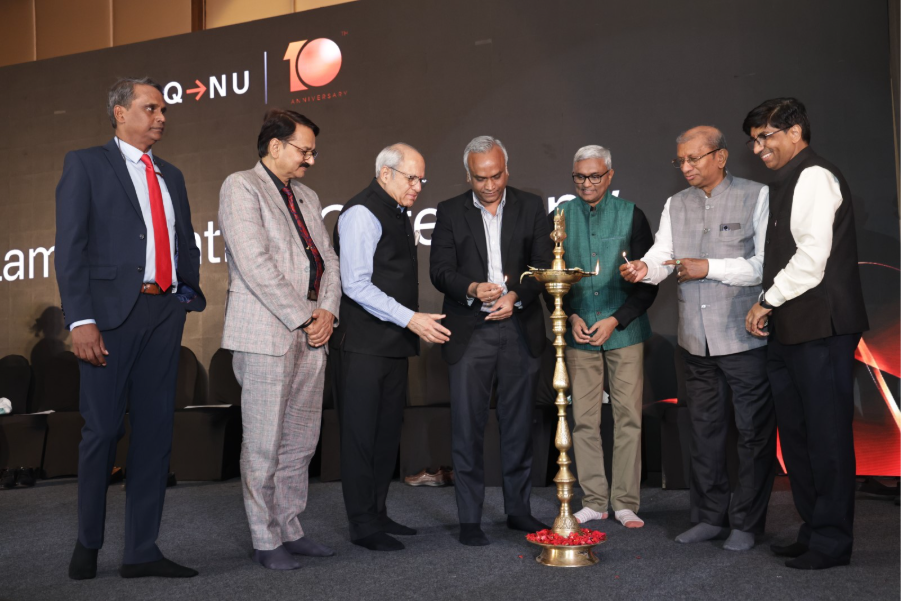
The people who walked into the anniversary event on the evening of 19th September 2026 were not there for a ceremony.
Dr Ajai Chowdhry, Chairman of the National Quantum Mission's Mission Governing Board and co-founder of HCL, was present. So were Dr JBV Reddy of the Department of Science and Technology, Dr Ajay Dharam Singh, Karnataka's Minister for Science and Technology, and Priyank Kharge, Karnataka's Minister for IT, Biotechnology and e-Governance.
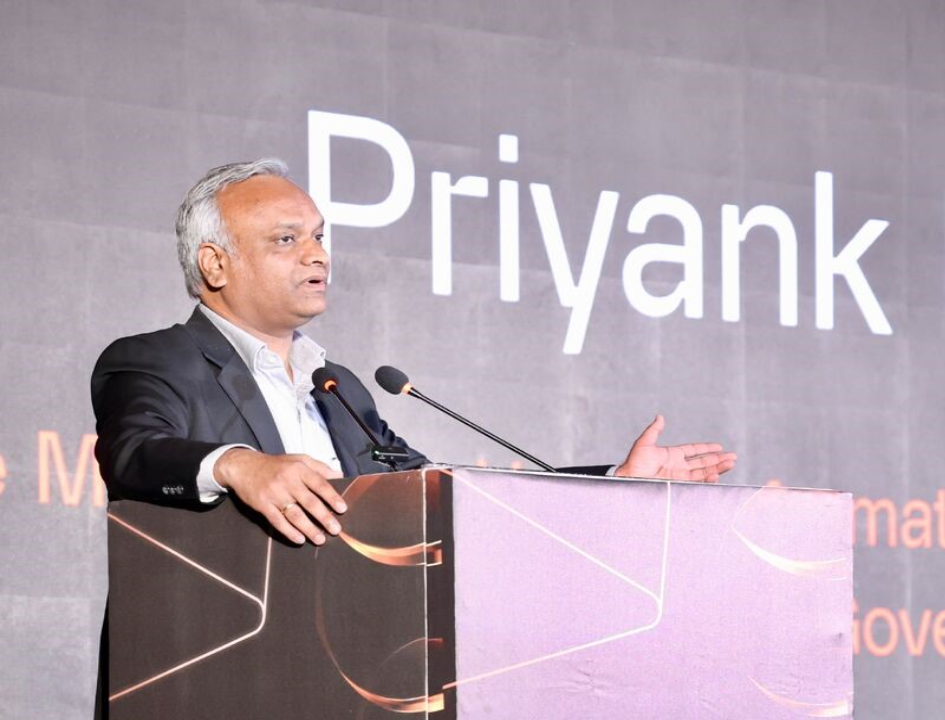
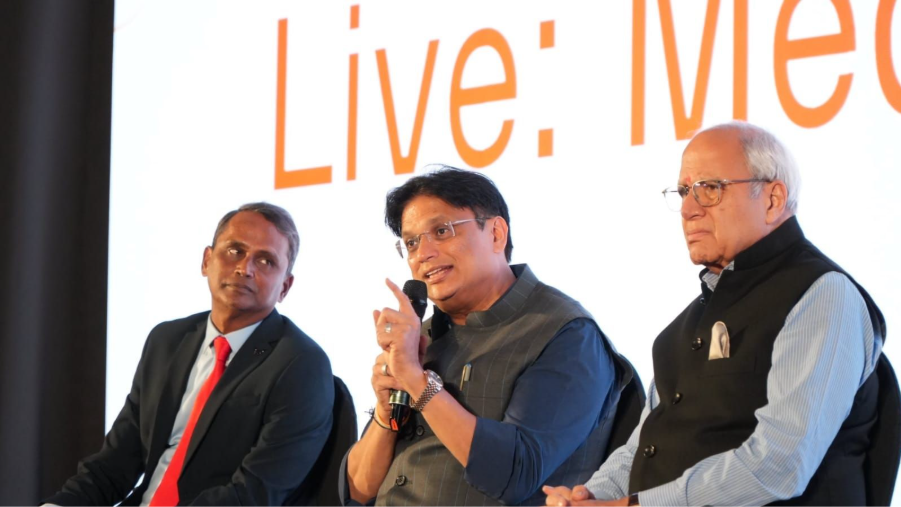
Dr Ajay Dharam Singh anchored it further. A Rs 1,000 crore Karnataka Quantum Mission fund. A quantum task force uniting academia, research and industry. And a roadmap built on one conviction: researchers create knowledge, knowledge creates innovation, innovation creates enterprise, and enterprise creates global impact. He announced Karnataka's plan to develop the 2027 Quantum India Bengaluru Summit into a global platform and named QNu Labs as a company that should actively participate in the proposed Quantum City. As PTI reported via Rediff, Karnataka has set a $20 billion quantum economy target for 2035.
Prof. Abhay Karandikar, Member of NITI Aayog, delivered the evening's most consequential statement. On the sidelines of the event, he told ETTelecom, The Economic Times that NITI Aayog is developing a quantum communication risk-assessment framework in consultation with RBI, SEBI and TRAI, and that regulators could begin asking banks, stock exchanges and telecom companies whether quantum-safe frameworks are actually deployed. He cited QNu Labs specifically, and the 1,000 km QKD demonstration, as an example of indigenous capability under the National Quantum Mission moving toward global competitiveness.
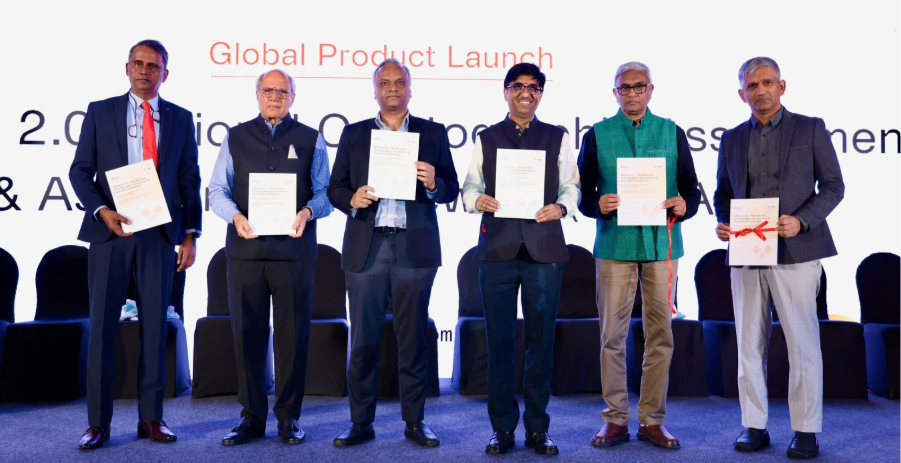
The evening was not only a celebration. It was a product launch with a clear framework behind it.
QShield 2.0 powers India's National Cryptographic Assessment and Assurance Framework (NCAAF) through three continuous processes: Discover, Assess, Assure. Locate cryptographic assets across an organisation's systems. Score each against quantum and classical risk. Validate them on an ongoing basis, not through periodic audits. Five underlying modules drive the platform: Quantum Entropy, Quantum Readiness Risk Assessment, Quantum PKI, Quantum Vault, and AI Security. The last of those addresses cryptographic risk in AI models and autonomous agents, a category most security frameworks have not yet named.
The Quantum Insider and Quantum Computing Report both covered the launch within 24 hours. Raksha Anirveda covered it for the defence and national security audience. Communications Today picked it up for the telecom sector. The Qubit Report included it in its weekly industry roundup. The anniversary became a global quantum industry news event.
QShield 2.0 makes the tenth anniversary feel like a transition point, not an endpoint. A decade of building the capability. A framework to deploy it at national scale. A government ecosystem finally moving at the same speed.
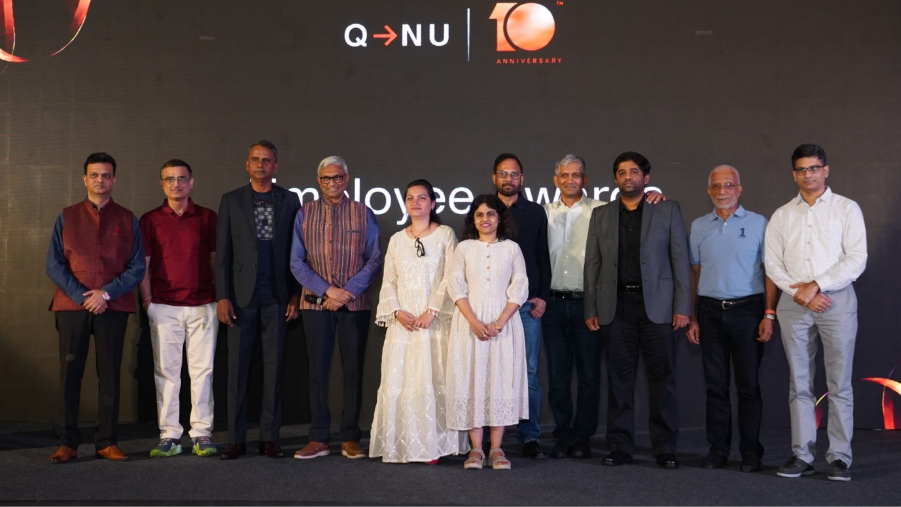
The next ten years will build a global quantum security and intelligence company from India.
That is the direction set not by a marketing team but by the ecosystem that gathered in Bengaluru on 20 September 2026: NITI Aayog, the National Quantum Mission, two Karnataka ministers, the Department of Science and Technology, and the international quantum media that carried it.
Quantum security is no longer a future technology. It is a present-day infrastructure question. The policy framework is catching up to the engineering that has been running for a decade.
Karnataka has always been where science meets enterprise. For ten years, QNu Labs has been the proof that it does.
The conversation in Bengaluru on 20 September was about what India's quantum-safe infrastructure looks like. The next conversation is about whether your organisation is part of it - See where you stand.